


The heaviest part of your luggage is rarely your camera, but the wrong lens choice can turn a walk through a new city into a slog. You actually need less gear than you suspect, provided you pick optics that serve a clear purpose.
Building a collection of the Best Travel Lenses for Canon is about minimizing weight while maximizing the reach you have on the ground. A lean kit helps you move faster and stay less visible, which is exactly how you capture those candid moments. Keep reading to see how to pack lighter for your next trip.
Key Takeaways
- Prioritize lenses with image stabilization if you plan to shoot handheld in low light conditions.
- Choose a focal length range that covers the specific subjects you prefer, such as wide vistas or distant wildlife.
- Consider the weight of your glass because carrying heavy equipment all day will eventually slow your pace.
- Check that your lens mount is compatible with your specific camera body to avoid needing an adapter.
- Value versatility over extreme specifications if you want to limit the number of times you switch lenses in the field.
| Ultimate Travel Wide |  |
Canon RF-S 10-18mm Ultra-Wide Zoom | Extremely portable design | Excellent wide field view | Built-in optical stabilization | View on Amazon | Read Review |
| Professional Standard Workhorse |  |
Canon RF 24-70mm F2.8 L Lens | Constant fast aperture | Professional image quality | Reliable weather sealing | View on Amazon | Read Review |
| Comprehensive Starter Bundle | 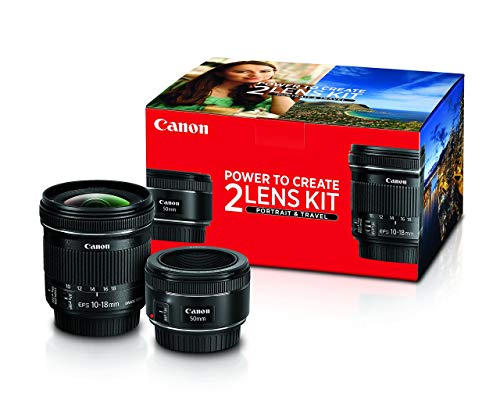 |
Canon Portrait and Travel Kit | Covers multiple shooting styles | Great value for money | Highly portable lenses | View on Amazon | Read Review |
| Essential Low Light Prime |  |
Canon EF 50mm F1.8 STM Lens | Very affordable price | Sharp image quality | Excellent in low light | View on Amazon | Read Review |
| Budget Wildlife Reach |  |
Canon EF 75-300mm Telephoto Zoom | Significant zoom range | Affordable telephoto reach | Easy to use | View on Amazon | Read Review |
| Compact Wildlife Specialist |  |
Canon RF 100-400mm Telephoto Zoom | Massive reach for size | Sharp image quality | Built-in stabilization | View on Amazon | Read Review |
More Details on Our Top Picks
-
Canon RF-S 10-18mm Ultra-Wide Zoom
If you want to capture the full scale of a mountain range or squeeze a massive cathedral into a single frame, this lens is your best companion. It is incredibly compact and lightweight, which makes it a dream for long days of walking through city streets or hiking trails.
Because it includes 4 stops of shake reduction, you can pull off sharper handheld shots even when the lighting starts to fade. The trade-off is a narrower maximum aperture, which means it is not the most effective tool for dark interiors or night photography.
- Brand:Canon
- Lens Type:Ultra-wide zoom
- Focal Range:10-18mm
- Aperture Range:F4.5-6.3
- Mount Type:Canon RF-S
- Special Features:Optical Image Stabilization
- Additional Feature:Perfect for vlogging
- Additional Feature:Great for tight spaces
- Additional Feature:Smooth STM autofocus motor
-
Canon RF 24-70mm F2.8 L Lens
This is the gold standard for photographers who need one lens to cover almost every scenario. With a constant bright F2.8 aperture, it performs exceptionally well in low light and provides a beautiful, creamy background blur for portraits.
The build quality is exactly what you expect from the L-series lineup, offering weather sealing that protects your glass against the elements. It is quite a heavy piece of equipment, so your neck might feel the weight after a full day of sightseeing.
- Brand:Canon
- Lens Type:Standard zoom
- Focal Range:24-70mm
- Aperture Range:F2.8
- Mount Type:Canon RF
- Special Features:L-series optics
- Additional Feature:Fast USM autofocus
- Additional Feature:Custom control ring
- Additional Feature:Built-in image stabilization
-
Canon Portrait and Travel Kit
Buying a kit is a clever way to stock your bag without making a dozen separate decisions. You get the versatility of a wide-angle zoom for your landscapes and a sharp prime lens that excels at isolating subjects with soft focus.
This combination covers the most common focal lengths you will encounter on a vacation. Just remember that because these are renewed items, you should keep an eye on the condition of the glass upon arrival.
- Brand:Canon
- Lens Type:Zoom and Prime kit
- Focal Range:10-18mm and 50mm
- Aperture Range:F4.5-6.3 and F1.8
- Mount Type:Canon EF
- Additional Feature:Includes dedicated portrait lens
- Additional Feature:Wide zoom for architecture
- Additional Feature:Lightweight for travel
-
Canon EF 50mm F1.8 STM Lens
Every photographer should own a 50mm lens, often called a nifty fifty, because it mimics the natural perspective of the human eye. It is small enough to hide in a jacket pocket, making it the perfect street photography tool when you want to stay discreet.
The wide aperture allows you to shoot in dim restaurants or evening markets without needing a flash. Since it is a fixed focal length, you will need to use your feet to zoom in or out.
- Brand:Canon
- Lens Type:Prime lens
- Focal Range:50mm
- Aperture Range:F1.8
- Mount Type:Canon EF
- Additional Feature:Smooth STM focusing
- Additional Feature:Small and lightweight
- Additional Feature:Bright maximum aperture
-
Canon EF 75-300mm Telephoto Zoom
If you are heading on a safari or just want to capture details of distant architecture, this lens provides the reach you need. It is a straightforward, no-nonsense telephoto zoom that helps you get closer to the action without physically moving.
It performs best in bright daylight where you can maintain faster shutter speeds. Because it lacks advanced image stabilization, you will likely need a tripod to keep your shots crisp at the longer end of the zoom range.
- Brand:Canon
- Lens Type:Telephoto zoom
- Focal Range:75-300mm
- Aperture Range:F4-5.6
- Mount Type:Canon EF
- Additional Feature:Versatile zoom capacity
- Additional Feature:Lightweight construction
- Additional Feature:Good for outdoor daytime
-
Canon RF 100-400mm Telephoto Zoom
This lens is surprisingly manageable for its impressive 400mm reach, which is a massive advantage when you are traveling light. It provides enough power to capture birds, wildlife, or athletes from across a field while remaining sharp throughout the zoom range.
The variable aperture means it is not intended for deep shadows or night work, so keep your daylight shooting in mind. It is a fantastic balance of performance and portability for the modern mirrorless user.
- Brand:Canon
- Lens Type:Telephoto zoom
- Focal Range:100-400mm
- Aperture Range:F5.6-8
- Mount Type:Canon RF
- Special Features:Image stabilization
- Additional Feature:Fast USM autofocus
- Additional Feature:Control ring included
- Additional Feature:Portable for long zoom
Frequently Asked Questions
Should I bring a prime lens or a zoom lens for my trip?
A zoom lens is usually the better choice if you only want to carry one piece of gear. It gives you the flexibility to adjust your frame instantly. However, prime lenses are often smaller and sharper, which makes them great if you have a specific artistic goal in mind.
Do I really need to worry about weather sealing?
If you plan on visiting humid climates or dusty environments, weather sealing is a smart investment. It protects the internal optics from moisture and grit that can ruin your gear. Always check the lens specifications to see if it includes gaskets around the mount.
Is a 50mm lens good for travel?
The 50mm, often called the nifty fifty, is a classic travel companion because it is incredibly compact and affordable. Its field of view is similar to human vision, which makes it perfect for candid street photography. It forces you to move your feet to frame the shot, which often leads to more creative compositions.
Can I use EF lenses on my new mirrorless Canon camera?
Yes, you can use EF lenses on mirrorless bodies by using a dedicated mount adapter. This is a great way to keep using your existing glass while upgrading to a newer camera body. The autofocus performance usually remains excellent with the official Canon adapter.
Why are some lenses so much more expensive than others?
Higher prices usually reflect the use of premium glass elements that reduce distortion and improve color accuracy. You are also paying for a wider maximum aperture and sturdier construction materials like metal alloys instead of plastic. These features provide better performance in difficult lighting conditions and last longer over time.