

Most people think regular watering and fertilizer are enough to keep grass green, but soil compaction actually suffocates root systems long before thirst sets in.
That is why attaching a heavy-duty aerator to your riding mower changes everything.
Finding the Best Tow Behind Lawn Aerators comes down to matching your yard size with the right soil penetration method. Let us look at four solid choices that handle the heavy lifting for you.
Key Takeaways
- Decide between plug cores and spike tines based on how severely compacted your soil is.
- Check the working width to ensure the model matches your tractor power and yard layout.
- Look for a sturdy weight tray so you can add extra ballast for deeper penetration.
- Galvanized steel and heavy-gauge steel construction prevent rust and extend overall tool lifespan.
- Integrated transport wheels make moving the unit across driveways and sidewalks much safer.
| Best Overall Performer | 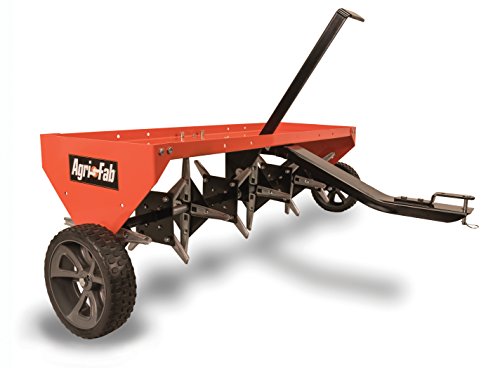 |
Agri-Fab 48 Inch Plug Aerator | Wide coverage path | Pulls deep soil plugs | Heavy-duty galvanized knives | View on Amazon | Read Review |
| Budget Friendly Pick |  |
BlumeTrec 40 Inch Spike Aerator | Affordable option | Independent rotating tines | Easy assembly process | View on Amazon | Read Review |
| Ultimate Two In One | 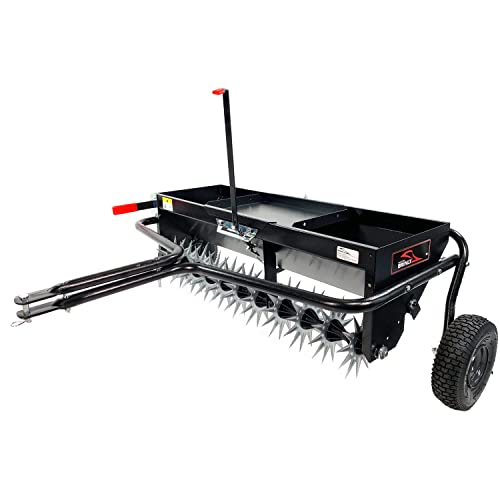 |
Brinly 40 Inch Combination Aerator Spreader | Aerates and spreads simultaneously | Large capacity hopper | Heavy weight tray included | View on Amazon | Read Review |
| Smooth Transporting Choice | 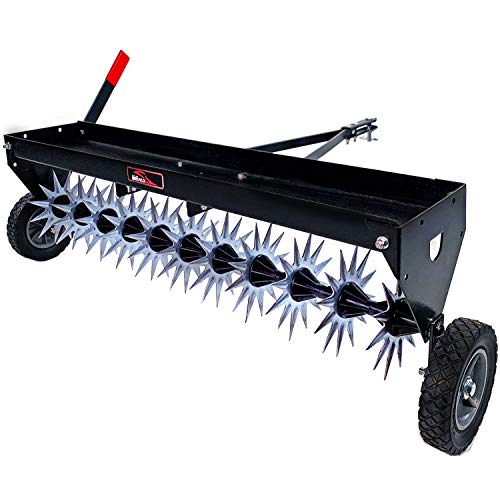 |
Brinly 40 Inch Spike Aerator | Easy transport wheels | Durable star tines | Simple lever operation | View on Amazon | Read Review |
More Details on Our Top Picks
-
Agri-Fab 48 Inch Plug Aerator
Getting water and nutrients down to the root system of your turf requires heavy-duty intervention. This 48-inch machine pulls clean soil plugs out of the ground rather than just poking holes, which cures compacted dirt caused by heavy foot traffic. It makes a fantastic choice for larger properties that demand serious ground coverage during weekend yard maintenance.
You get 32 galvanized knives that punch deeply into stubborn earth without bending under pressure. A universal hitch hooks up quickly to your riding mower, so you spend less time fussing with gear and more time working. The main drawback is that you will need to supply your own cinder blocks or heavy weights on the tray to achieve maximum penetration in hard clay.
- Brand:Agri-Fab
- Type:Plug aerator
- Size:48 inches
- Material:Galvanized steel
- Hitch Type:Universal hitch
- Additional Feature:Transport handle for raising tines
- Additional Feature:Durable steel construction
- Additional Feature:Pull-behind design for mowers
-
BlumeTrec 40 Inch Spike Aerator
Sometimes you just need a simple tool to punch pathways for seed and fertilizer without breaking the bank. This 40-inch spike model uses sharp star wheels to slice right through thatch and minor surface crust. It suits homeowners who want a straightforward gardening helper for routine lawn upkeep.
Ten galvanized steel tines rotate independently to avoid tearing up your turf on sharp turns. The extra-wide tow bar adds stability while you pull it behind a tractor across uneven terrain. Keep in mind that solid spikes displace soil sideways rather than removing a core, so this design is less effective on severely compacted clay.
- Brand:BlumeTrec
- Type:Spike aerator
- Size:40 inches
- Material:Galvanized steel
- Hitch Type:Universal tow bar
- Additional Feature:Built-in transport wheels
- Additional Feature:Wide tow bar included
- Additional Feature:Rust-resistant steel finish
-
Brinly 40 Inch Combination Aerator Spreader
Efficiency matters when you have a long list of Saturday chores waiting for attention. This clever combination unit aerates the soil and spreads seed or fertilizer simultaneously, cutting your yard work time in half. It works brilliantly for busy property owners who want to feed and repair their lawn in a single pass.
A built-in weight tray lets you pile on up to 150 pounds of extra mass for deep tine engagement. The heavy-duty steel spread hopper handles high volumes of material smoothly without clogging. On the downside, the dual-purpose design makes the machine quite heavy and cumbersome to store in a crowded shed.
- Brand:Brinly
- Type:Combination aerator and spreader
- Size:40 inches
- Material:Flat black steel
- Hitch Type:Universal pin hitch
- Additional Feature:Calibrated flow rate control
- Additional Feature:Enclosed commercial gearbox
- Additional Feature:Heavy-duty weight tray
-
Brinly 40 Inch Spike Aerator
Moving your equipment across concrete driveways and stone pathways can ruin standard tines in a hurry. This 40-inch spike aerator solves that problem with a convenient transport mechanism that lifts the star wheels off the ground instantly. It fits yard caretakers who need to cross hard surfaces frequently between different mowing zones.
The durable steel star points slice neatly into the turf to let air and moisture reach thirsty roots. Integrated transport wheels flip down quickly with a simple lever pull. The limitation here is that spike aerators cannot loosen tightly packed clay as thoroughly as core pluggers do.
- Brand:Brinly
- Type:Spike aerator
- Size:40 inches
- Material:Hammered black steel
- Hitch Type:Universal pin hitch
- Additional Feature:Quick transport wheel conversion
- Additional Feature:Rust-resistant hammered finish
- Additional Feature:Heavy-duty steel weight tray
Frequently Asked Questions
Do I need a spike aerator or a plug aerator for my yard?
You should almost always choose a plug aerator unless your soil is already loose and sandy. Core aeration removes actual soil plugs, which relieves compaction and allows water, fertilizer, and air to reach the root zone effectively.
How much weight should I put on the aerator tray?
You should check the manufacturer guidelines, but most standard trays safely hold between one and two cinder blocks or roughly 100 to 150 pounds of ballast. Start with a moderate weight to see how deep the tines sink, and only add more if your soil is particularly hard clay.
Can I aerate my lawn when the soil is dry?
Trying to aerate bone-dry soil is a recipe for frustration because the tines will barely scratch the surface instead of penetrating deeply. You want to run your aerator a day or two after a good rainfall, or water the lawn thoroughly a few hours before you start working.
How do I prevent the aerator from damaging my underground sprinkler heads?
Marking your sprinkler heads, shallow utility lines, and invisible dog fences with small flags or stakes before you start is the best strategy. Keep your mower moving at a slow, steady speed and remember to lift the tines before you make sharp turns near the edges of your yard.
How often do I need to tow an aerator across my grass?
Once a year is usually plenty for most residential lawns, with early fall or spring being the prime windows for the job. Fall is particularly ideal because the soil is warm, weed competition is lower, and the grass has plenty of time to recover and fill in the holes over the winter.