

The beeping monitor echoes through the room while a patient waits for the next move. Your mind races to recall the specific milestone or technique needed to move forward. Having the right tools at your fingertips transforms this high-pressure friction into focused action.
These Best Ot Programs and reference sets act as a second brain during clinical hours. They sharpen your responses when a patient's progress hinges on a precise intervention. Browse these options to find the support you need for your daily practice.
Key Takeaways
- Prioritize physical reference cards that feature durable materials like PVC to withstand constant hospital cleaning.
- Select activity books with progressive difficulty levels so you can adapt sessions to a wide range of patient abilities.
- Choose exam prep guides that include updated clinical rationales rather than simple question banks for deeper learning.
- Verify that your pocket guides cover both pediatric and adult populations if you rotate through different clinical settings.
- Check the page count and index quality to ensure you can find specific protocols quickly during a busy shift.
| Essential Certification Companion |  |
OT Exam Prepper | Targeted exam material | Clear study structure | High clinical relevance | View on Amazon | Read Review |
| Versatile Clinical Reference |  |
Adult and Pediatric OT Cards | Covers both populations | Durable construction | Easy to reference | View on Amazon | Read Review |
| Compact Student Handbook |  |
OT School Essentials Pocket Guide | Highly portable size | Practical clinical tips | Durable build quality | View on Amazon | Read Review |
| Pediatric Development Resource |  |
OT Activity Book Worksheets | Ready to use | Targets fine motor | Clear developmental goals | View on Amazon | Read Review |
| Comprehensive Academic Manual |  |
Occupational Therapy Examination Review Guide | Thorough subject coverage | Academic rigor | Reliable study structure | View on Amazon | Read Review |
| Reliable Reflex Reference | 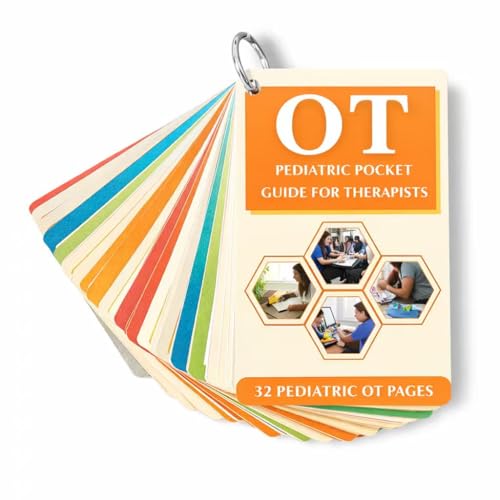 |
Pediatric OT Pocket Cards | Exceptionally durable | Focused pediatric data | Fast information retrieval | View on Amazon | Read Review |
| Practitioner’s Desk Companion |  |
Quick Reference to Occupational Therapy | Broad information scope | Reliable clinical protocols | Clear organizational structure | View on Amazon | Read Review |
| Hospital Setting Specialist |  |
Acute Care OT Guide | Specific to hospitals | Expert mobilization advice | Interdisciplinary focus | View on Amazon | Read Review |
| Adult Rehab Essential |  |
Adult OT Quick Reference Cards | Targeted adult content | High quality design | Easy to organize | View on Amazon | Read Review |
| Progressive Skill Builder |  |
Grow With Me OT Workbook | Encourages skill progression | Builds user confidence | Simple, clear tasks | View on Amazon | Read Review |
More Details on Our Top Picks
-
OT Exam Prepper
If you are preparing for the board exam, this is the primary study tool you need on your desk. It focuses on the core concepts required to pass, acting as a clear roadmap through complex clinical material.
The content is distilled down to what matters most for your exam performance. While it is excellent for review, do not expect it to replace your primary textbooks or hands-on clinical training.
- Skill Focus:Board exam preparation
- Additional Feature:Comprehensive core content
- Additional Feature:Logical study progression
- Additional Feature:Focused review sections
-
Adult and Pediatric OT Cards
These reference cards serve as a portable brain for practitioners working across different age groups. They cover a wide range of needs, making them a smart choice for students entering their first clinical rotation.
Having these quick reference guides is like having a senior therapist peering over your shoulder with helpful reminders. The only drawback is that the sheer volume of information can feel overwhelming if you are not organized in how you use them.
- Primary Population:Adults and children
- Page Count:74 pages
- Reference Content:Essential field tips
- Additional Feature:Pocket sized format
- Additional Feature:Quick reference index
- Additional Feature:Durable laminate coating
-
OT School Essentials Pocket Guide
This 32-page guide is built specifically for the busy OT student who needs fast information during rotations. It fits right in your pocket, ensuring you have clinical tips at your fingertips without carrying heavy manuals.
It focuses heavily on adult rehabilitation, making it a perfect match for those in hospital or outpatient settings. It is limited by its specialized focus, so keep this in mind if your current placement is strictly pediatric.
- Page Count:32 pages
- Reference Content:Adult rehab strategies
- Skill Focus:Clinical practice
- Additional Feature:Lightweight design
- Additional Feature:Pocket friendly dimensions
- Additional Feature:Essential rehab data
-
OT Activity Book Worksheets
If you work with children, these worksheets are a reliable source for visual and fine motor skill practice. They offer a structured approach to development, saving you hours of time you would otherwise spend designing custom exercises.
The activities are straightforward and easy to implement during a busy session. Some users might find the exercises too repetitive if they are looking for highly specialized, one-off interventions.
- Primary Population:Pediatric
- Skill Focus:Motor development
- Additional Feature:Printable worksheet format
- Additional Feature:Visual motor activities
- Additional Feature:Progressive difficulty levels
-
Occupational Therapy Examination Review Guide
This guide is an extensive resource for students who want a deep dive into the theoretical foundations of the field. It provides a systematic review that is difficult to find in more condensed study materials.
It functions best as a long-term study partner rather than a last-minute cramming tool. Because it is so thorough, it can be a heavy read if you are short on time.
- Format Type:Review book
- Skill Focus:Exam readiness
- Additional Feature:In-depth content analysis
- Additional Feature:Practice question segments
- Additional Feature:Theoretical framework summaries
-
Pediatric OT Pocket Cards
These PVC cards are built to withstand the chaos of a pediatric clinical environment. They provide instant clarity on reflexes and developmental milestones when you are moving quickly between patients.
The plastic material is a highlight, as it survives spills and frequent handling. However, the scope is strictly pediatric, so you will need a separate set for your adult rotations.
- Primary Population:Pediatric
- Material Quality:PVC plastic
- Reference Content:Reflexes and milestones
- Additional Feature:Water resistant finish
- Additional Feature:Compact card set
- Additional Feature:Fieldwork friendly
-
Quick Reference to Occupational Therapy
Think of this book as a standard anchor for your clinical practice. It provides a wide breadth of information that helps you verify protocols and intervention strategies on the fly.
It is an excellent addition to your office bookshelf for daily consultation. It is not designed to be a portable pocket guide, so it is better suited for stationary use than for carrying in your scrubs.
- Format Type:Reference book
- Skill Focus:Clinical intervention
- Additional Feature:Standardized terminology
- Additional Feature:Protocol checklists
- Additional Feature:Professional resource material
-
Acute Care OT Guide
Acute care is a fast-paced environment, and this guide provides the necessary strategy to perform well under pressure. It excels at explaining early mobilization and functional recovery in a hospital context.
This book is invaluable if you are transitioning into a high-acuity unit. It is highly technical, which makes it less useful for those working in school systems or long-term community care.
- Primary Population:Hospital patients
- Skill Focus:Acute intervention
- Additional Feature:Assessment strategies
- Additional Feature:Early mobilization techniques
- Additional Feature:Functional recovery plans
-
Adult OT Quick Reference Cards
These cards offer a refined collection of data specifically for the adult population. They are a great gift for new therapists who want to feel more confident and prepared during their first week of work.
The information is presented in a clean, logical way that reduces decision fatigue. Like other card sets, their small size means the text is concise, requiring you to have a solid baseline of knowledge to use them effectively.
- Primary Population:Adults
- Reference Content:Clinical essential cards
- Additional Feature:Forty-two card set
- Additional Feature:Professional formatting
- Additional Feature:Lightweight portability
-
Grow With Me OT Workbook
This workbook is a practical tool for those focusing on long-term fine motor development. It uses a progressive system to help children build confidence through repetitive, structured tasks.
It is highly effective for home programs or extra practice during sessions. Since it is a consumable workbook, you will need to replace it once the pages are filled, unlike a reference manual.
- Primary Population:Pediatric
- Skill Focus:Fine motor
- Additional Feature:Pencil control exercises
- Additional Feature:Progressive activity levels
- Additional Feature:Confidence building drills
Frequently Asked Questions
What is the difference between an MOT and an OTD?
An MOT degree focuses on core clinical skills and is often completed in two years. An OTD degree adds an extra year with an emphasis on research, leadership, and policy. Both degrees qualify you to sit for the national board exam.
How long does it take to become an occupational therapist?
You typically spend two years in a graduate program after completing your bachelor’s degree. Including undergraduate prerequisites, the total path usually spans six to seven years. Accelerated programs can shave off time if you meet specific academic requirements.
Do I need a specific undergraduate major to apply?
Most programs accept various majors as long as you complete the required prerequisites. Common courses include human anatomy, physiology, and psychology. Check specific school websites, as science-heavy degrees often provide the best preparation.
Are online OT programs respected by employers?
Employers prioritize your license and clinical experience over the delivery method of your degree. As long as the program is fully accredited, hiring managers view online and in-person graduates as equally qualified. The quality of your fieldwork placements matters most.
What is the NBCOT exam?
The NBCOT exam is the final hurdle before you can practice professionally. It tests your knowledge of assessment, intervention, and ethics. Passing this test is the mandatory step to obtaining your state license.