


The studio is quiet, but your mind is buzzing with a melody that needs a physical form. You feel the itch to push a button or slide a fader to transform that abstract hum into something tangible.
Choosing your first hardware instrument is like picking a dance partner for the first time. The Best Beginner Synths remove the friction between your ears and the speaker. Here is how you can find the right tool to start making noise.
Key Takeaways
- Prioritize an instrument with a built-in speaker if you want the freedom to play anywhere without messy cables or external monitors.
- Check if the interface is knob-per-function because having physical controls for every parameter makes learning synthesis much faster.
- Look for polyphony specifications to understand if you can play full chords or if the unit is limited to single notes at a time.
- Verify the connectivity options to ensure you can sync the hardware with your computer or other gear later on.
- Consider whether a built-in sequencer is necessary for your workflow, as this allows you to create patterns without external help.
| Nostalgic Sonic Toy |  |
Stylophone Original Pocket Synthesizer | Extremely simple to operate | Iconic retro aesthetic | Highly portable design | View on Amazon | Read Review |
| Versatile Sound Designer |  |
Novation MiniNova Analog Modeling Synth | Deep sound customization | Fun vocoder features | Compact yet powerful | View on Amazon | Read Review |
| Rapid Song Creator |  |
Roland J-6 Chord Synth | Classic Roland sound | Intuitive chord sequencing | Highly portable hardware | View on Amazon | Read Review |
| Punchy Bass Machine |  |
Korg Monologue Monophonic Analog Synth | Real analog circuitry | Visual step sequencer | Excellent bass sounds | View on Amazon | Read Review |
| All-In-One Performer |  |
Akai MPK Mini Play MK3 | Internal sound library | Responsive drum pads | Battery power option | View on Amazon | Read Review |
| Experimental Sonic Explorer | 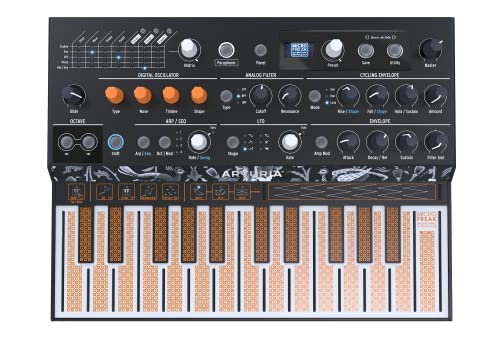 |
Arturia MicroFreak Paraphonic Synthesizer | Diverse sound engines | Unique touch keybed | Deep modulation possibilities | View on Amazon | Read Review |
| Standalone Beat Laboratory |  |
Akai MPC Sample Portable | Fully standalone operation | Built in rechargeable battery | Portable hardware interface | View on Amazon | Read Review |
| Software Production Companion | 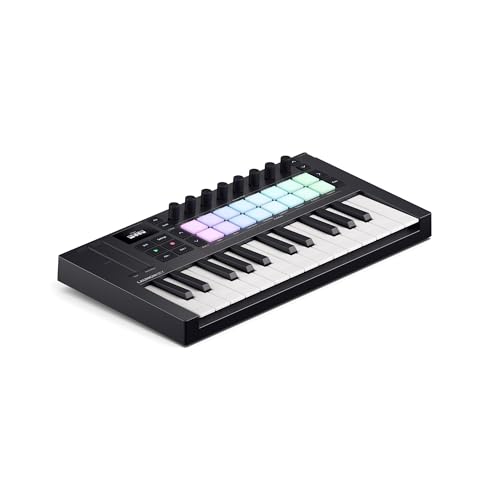 |
Novation Launchkey Mini MIDI Controller | Excellent software integration | Helpful scale modes | Compact and durable | View on Amazon | Read Review |
| Quirky Circuit Experiment |  |
Synth-a-Sette Cassette Analog Synth | Unique portable form | Conductivity features | Fun, retro design | View on Amazon | Read Review |
| Budget Learning Tool |  |
Donner Mini MIDI Controller | Includes teaching courses | Velocity-sensitive keys | Compact footprint | View on Amazon | Read Review |
More Details on Our Top Picks
-
Stylophone Original Pocket Synthesizer
If you want to start your musical journey without feeling overwhelmed by menus or confusing technical jargon, this is your best bet. It relies on a stylus and metal keyboard interface, which creates a distinct, buzzy sound that feels like a trip back to the 1970s.
It is incredibly simple to operate, making it a favorite for those who just want to make noise for fun. You might find the limited sound palette a bit restrictive if you are looking for professional studio depth, but it excels as a quirky creative tool.
- Brand Name:Stylophone
- Instrument Type:Analog Synthesizer
- Additional Feature:Stylus interface
- Additional Feature:Built in speaker
- Additional Feature:Vibration effect switch
-
Novation MiniNova Analog Modeling Synth
This powerhouse is built for the musician who loves to tweak every single detail of a sound. With 18-voice polyphony and a massive library of 256 presets, you have plenty of room to explore complex textures right out of the box.
The built-in vocoder is a major highlight, allowing you to manipulate your own voice in real time. Because it packs so much power into a small frame, the menu system can feel a bit dense for a total newcomer.
- Brand Name:Novation
- Instrument Type:Analog Modeling Synth
- Key Count:37 mini keys
- Voice Polyphony:18-voice
- Additional Feature:Animate buttons
- Additional Feature:Five effects per voice
- Additional Feature:USB connectivity
-
Roland J-6 Chord Synth
Think of this as a dedicated engine for building the backbone of your tracks without needing a computer. It features the legendary JUNO-60 sound engine, giving you that classic, warm Roland tone that fits perfectly into any electronic genre.
The chord sequencer does the heavy lifting for you, which is perfect when you have a melody in your head but lack formal music theory knowledge. It is small enough to fit in a jacket pocket, though the button-based interface requires a bit of muscle memory to master.
- Brand Name:Roland
- Instrument Type:Chord Synthesizer
- Additional Feature:JUNO-60 presets
- Additional Feature:Built in effects
- Additional Feature:Portable song creation machine
-
Korg Monologue Monophonic Analog Synth
If you crave the raw, gritty character of true analog circuitry, this instrument delivers in spades. It specializes in monophonic leads and basslines, making it an essential tool for crafting lead melodies that cut through a dense mix.
The 16-step sequencer is incredibly easy to visualize, allowing you to lay down grooves and patterns without getting lost in a screen. Because it is monophonic, keep in mind that you cannot play chords, which might limit your arrangements if you want to play piano-style parts.
- Brand Name:Korg
- Instrument Type:Analog Synthesizer
- Power Source:Battery or DC adapter
- Additional Feature:16-step sequencer
- Additional Feature:Waveform shaping
- Additional Feature:Real-time parameter control
-
Akai MPK Mini Play MK3
This is a fantastic entry point for anyone who wants to produce music while sitting on the couch or traveling. It combines velocity-sensitive keys with built-in sounds, meaning you do not even need to connect it to a computer to start playing.
The eight drum pads are excellent for tapping out beats, offering a responsive feel that is hard to find in this size class. While the internal speaker is convenient for quick jams, you will eventually want to use external monitors to hear the true quality of the sounds.
- Brand Name:Akai
- Instrument Type:MIDI Keyboard Controller
- Key Count:25 keys
- Power Source:USB or Battery
- Additional Feature:Built in speaker
- Additional Feature:Software suite included
- Additional Feature:Eight assignable knobs
-
Arturia MicroFreak Paraphonic Synthesizer
You will struggle to find another synthesizer that offers as much experimentation for the price. With 21 oscillator modes, ranging from wavetable synthesis to physical modeling, it encourages you to break the rules of traditional keyboard playing.
The poly-aftertouch keybed is a standout feature, allowing you to manipulate sounds based on how hard you press down on the keys. It is a brilliant choice for the adventurous soul, though the touch-sensitive surface of the keys can take some getting used to.
- Brand Name:Arturia
- Instrument Type:Paraphonic Synthesizer
- Key Count:25 keys
- Additional Feature:CV pitch gate
- Additional Feature:Pressure sensitive keys
- Additional Feature:Wavetable oscillators
-
Akai MPC Sample Portable
If your focus is on manipulating audio clips and building rhythmic structures, this device is your new best friend. It functions as a standalone sampler, meaning you can capture sounds from the real world and turn them into beats without a computer in sight.
The built-in rechargeable battery makes it the perfect companion for long commutes or outdoor music sessions. It is a bit more specialized than a traditional keyboard, so be ready to spend time learning the sampling workflow.
- Brand Name:Akai
- Instrument Type:Portable Sampler
- Power Source:Rechargeable battery
- Additional Feature:Built in speaker
- Additional Feature:Built in microphone
- Additional Feature:USB-C connectivity
-
Novation Launchkey Mini MIDI Controller
This controller is designed to bridge the gap between your hardware and your computer software. It features polyphonic aftertouch on the pads, providing a level of expression that is typically reserved for much larger, more expensive gear.
The integrated scale and chord modes are lifesavers, helping you stay in key even if you have never taken a formal lesson. Since it is a controller and not a standalone synth, it will not make any noise unless you connect it to a computer or mobile app.
- Brand Name:Novation
- Instrument Type:MIDI Keyboard Controller
- Key Count:25 keys
- Power Source:USB
- Additional Feature:Polyphonic aftertouch pads
- Additional Feature:Built in arpeggiator
- Additional Feature:OLED display
-
Synth-a-Sette Cassette Analog Synth
If you like your gear with a side of mystery and charm, this device is a conversation starter. It is designed to look like a standard cassette tape, yet it houses a functioning analog synthesizer that can create surprisingly nostalgic textures.
A standout trick is its ability to turn almost any conductive object into a keyboard, which allows for experimental music making that goes beyond standard keys. It is quite small and fragile compared to standard studio gear, so it is better suited for light fun than professional road use.
- Brand Name:Synth-a-Sette
- Instrument Type:Analog Synthesizer
- Additional Feature:Banana keyboard support
- Additional Feature:Pocket size format
- Additional Feature:Analog circuitry
-
Donner Mini MIDI Controller
This is an approachable way to get your feet wet in music production without breaking the bank. It comes with 40 teaching courses, making it a very supportive choice if you are just starting to learn how to play melodies.
The velocity-sensitive keys offer enough nuance to keep your playing expressive, which is a great bonus at this level. You should keep in mind that the build is lightweight, so it is perfect for a home desk setup but might not survive being tossed in a heavy backpack.
- Brand Name:Donner
- Instrument Type:MIDI Keyboard Controller
- Key Count:25 keys
- Power Source:USB
- Additional Feature:Light-up rocker
- Additional Feature:Software bundle included
- Additional Feature:Easy plug-and-play setup
Frequently Asked Questions
Do I need an external amplifier or speakers to hear my synth?
Most synths do not have built-in speakers, so you will need a set of studio headphones or powered monitor speakers. Plug these into the main output jack on the back of the unit. Without these, you will be playing in total silence, which is a bit of a creative dead end.
What is a patch and why does it matter?
A patch is a saved setting that defines a specific sound, such as a bass tone or a spacey pad. Most modern synths come with preset patches pre-loaded so you can start playing immediately. Learning to create your own patches is the best way to develop a unique musical voice.
Is it difficult to learn how to program a synthesizer?
Learning synthesis is like learning a new language, but the basic building blocks are consistent across almost every machine. Focus on understanding oscillators, filters, and envelopes first. Once you grasp these three components, you can shape almost any sound you hear in your head.
Can I use a beginner synth for professional recording?
Absolutely, as many famous tracks have been recorded using affordable, entry-level hardware. The sound quality of budget gear has improved significantly in recent years. If you learn to mix your track correctly, nobody will be able to tell the difference between your budget gear and a professional studio rig.
What is the difference between an oscillator and a filter?
The oscillator is the source of the sound, acting much like the vocal cords in your throat. The filter then shapes the tone by removing certain frequencies, similar to how your mouth and lips change the sound of your voice. Mastering the relationship between these two is the secret to great sound design.