

The biggest difference between a dull, thin recording and a professional vocal track is the sensitivity of the capsule. Your room's acoustic personality matters, but the microphone does the heavy lifting to capture every nuance.
Investing in one of the Best Microphones for Home Recording Vocals ensures your voice sits clearly in the mix. Take a moment to see which gear aligns with your setup needs.
Key Takeaways
- Prioritize a cardioid polar pattern to reject unwanted noise from the back of the microphone.
- Check if your interface provides the forty-eight volt phantom power required for condenser microphones.
- Verify that the microphone's frequency response fits the natural timber of your specific vocal range.
- Account for the total cost by ensuring the package includes essential mounting hardware and cabling.
- Choose a large-diaphragm model if you want a rich and warm character in your recordings.
| Industry Standard Workhorse | 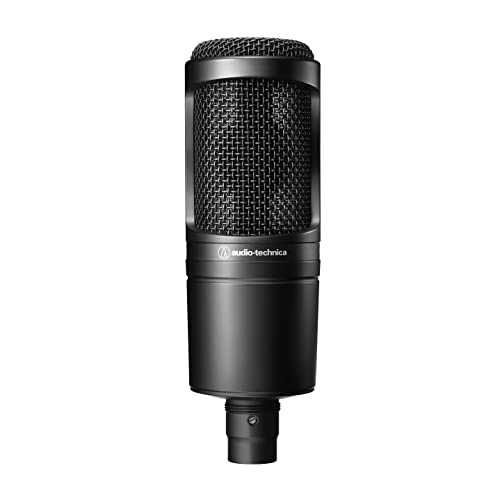 |
Audio-Technica AT2020 Cardioid Condenser Microphone | Extremely consistent audio quality | Durable metal construction | Superior noise rejection | View on Amazon | Read Review |
| Acoustic Treatment Solution |  |
SwaykTech Studio Microphone Isolation Shield | Reduces room echo | Includes pop filter | Portable tripod stand | View on Amazon | Read Review |
| Complete Starter Package |  |
MAONO PM320S XLR Condenser Microphone | Includes sturdy boom arm | Excellent vibration isolation | Clear vocal pickup | View on Amazon | Read Review |
More Details on Our Top Picks
-
Audio-Technica AT2020 Cardioid Condenser Microphone
If you are looking for the gold standard for your first home studio setup, this microphone is the reliable anchor you need. Its cardioid polar pattern excels at ignoring background noise, which makes it perfect for bedrooms or untreated home offices. You will find that its consistent audio reproduction is like a faithful mirror for your voice.
The build quality is substantial, feeling more like a piece of professional equipment than a budget item. But keep in mind that since this is an XLR microphone, you will need a separate audio interface to provide the required 48V phantom power. It is a serious tool for those ready to move past basic USB recording.
- Brand:Audio-Technica
- Microphone Type:Condenser
- Connection Method:XLR
- Mounting Style:Stand mount
- Additional Feature:Fixed cardioid polar pattern
- Additional Feature:Wide frequency response
- Additional Feature:High SPL handling
-
SwaykTech Studio Microphone Isolation Shield
You might have the best microphone in the world, but your recording will still sound muddy if your room has too much echo. This kit acts as a vocal booth proxy, surrounding the mic with sound-absorbing foam to kill unwanted reflections before they reach the capsule. It is the best choice if you are recording in a hollow-sounding space like a kitchen or a tiled room.
Because it comes as a complete bundle, you get a pop filter and a tripod stand right out of the box. Just remember that this is an acoustic accessory kit rather than a high-end studio microphone, so your final sound quality depends heavily on the mic you pair with it. It serves as a great shortcut to cleaner tracks.
- Brand:SwaykTech
- Included Accessories:Isolation shield, pop filter, tripod
- Mounting Style:Desktop tripod
- Material Construction:Metal and foam
- Additional Feature:Adjustable shield panels
- Additional Feature:Integrated microphone mount
- Additional Feature:Lightweight frame design
-
MAONO PM320S XLR Condenser Microphone
Getting everything you need for a vocal session can be a headache, but this set solves that by including the boom arm and shock mount in one box. It is designed for creators who want a clean, clutter-free desk space without sacrificing their recording ergonomics. The arm is sturdy enough to hold the mic exactly where you want it.
The sound signature is tailored for clarity, which helps vocals sit well in a mix without much extra processing. Like other professional XLR mics, it does require a dedicated audio interface to function. It is a fantastic option if you want to avoid buying individual components separately.
- Brand:MAONO
- Microphone Type:Condenser
- Connection Method:XLR
- Included Accessories:Boom arm, shock mount, pop filter
- Mounting Style:Desk clamp boom arm
- Additional Feature:Integrated shock mount
- Additional Feature:Balanced XLR output
- Additional Feature:Flexible positioning arm
Frequently Asked Questions
Do I need a pop filter for home recording?
Yes, you absolutely should get one. A pop filter acts as a physical barrier that stops sudden bursts of air, known as plosives, from hitting the capsule. These bursts happen when you say words starting with "p" or "b" and can cause a loud, unpleasant thump in your recording.
Can I record vocals in a room without soundproofing?
You can, but you must be strategic about your environment. Soft furniture, thick rugs, and heavy curtains help absorb reflections that would otherwise make your voice sound hollow. Avoid recording in small, square rooms with bare walls, as these spaces create standing waves that muddy the audio.
What is phantom power and do I need it?
Phantom power is a 48-volt charge sent from your interface through the XLR cable to power the internal circuitry of a condenser microphone. If your microphone is a condenser model, you must have an interface or mixer that provides this voltage. Dynamic microphones do not need this power to function.
How close should I stand to the microphone?
A good rule of thumb is to stay about six to eight inches away from the capsule. If you get too close, you will experience the proximity effect, which causes an unnatural boost in low-end frequencies. Start at a distance of one hand span and adjust based on how much body you want in your recorded tone.
Do I need expensive gear to get professional results?
You do not need the most expensive microphone to produce a great vocal track. Modern entry-level equipment is much better than it was even a decade ago. Focus on your microphone technique and the acoustics of your room, as those factors have a larger impact on the final sound than the price tag of your gear.