

Drainage is the ultimate line between a thriving specimen and a rotting root ball. Container growing leaves your trees with zero margin for error.
You need a medium that holds just enough moisture while letting excess water sprint out the bottom. Finding the Best Soils for Japanese Maple in Container applications demands precision.
Let us break down what actually works for potted maples.
Key Takeaways
- Prioritize a coarse, fast-draining texture over dense potting compost that retains too much stagnant water.
- Look for organic amendments like pine bark fines to create crucial air pockets around delicate feeder roots.
- Maintain an acidic pH between 5.5 and 6.5 to keep essential nutrients readily available for uptake.
- Avoid heavy garden soil because it compacts rapidly inside restricted pots and suffocates root systems.
- Select a mixture containing perlite or pumice for long-term structural stability that resists breaking down.
| Ultimate DIY Project | 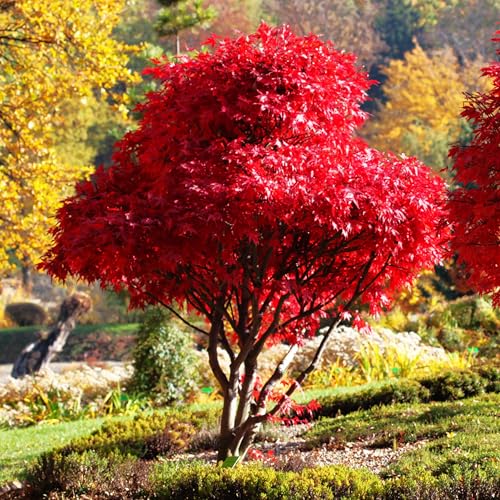 |
TomorrowSeeds Red Japanese Maple Seeds | High seed count | Affordable starting method | Beautiful burgundy leaves | View on Amazon | Read Review |
| Compact Living Specimen |  |
Hanami Nishiki Japanese Maple Plant | Two-year established root system | Ready for immediate potting | Attractive variegated foliage | View on Amazon | Read Review |
| Instant Container Impact |  |
Red Japanese Maple Starter Tree | Reaches up to three feet | Deep red foliage | Substantial branching | View on Amazon | Read Review |
| Comprehensive Reference Manual |  |
Japanese Maples Cultivation Guidebook | Written by recognized experts | Clear cultivar identification | Detailed care instructions | View on Amazon | Read Review |
| Traditional Native Option |  |
Heirloom Red Maple Tree Seeds | Heirloom seed stock | Strong natural germination rate | Adaptable to various climates | View on Amazon | Read Review |
| Sweet Fruit Producer |  |
Pakistan Mulberry Fruit Tree Pair | Set of two plants | Rapid early growth | Produces edible fruit | View on Amazon | Read Review |
| Sun Tolerant Weeper |  |
Tamukeyama Weeping Japanese Maple | Tolerates sun exposure | Weeping laceleaf habit | Established live plant | View on Amazon | Read Review |
| Miniature Bonsai Starter |  |
Japanese Red Maple Bonsai Seeds | Highly prized bonsai variety | Economical starting quantity | Compact growth potential | View on Amazon | Read Review |
More Details on Our Top Picks
-
TomorrowSeeds Red Japanese Maple Seeds
Growing a tree from seed is patience in action. You will need to invest months of stratification before these seeds wake up from dormancy.
This option suits gardeners who love absolute control over the entire growing cycle. The main challenge is the high failure rate inherent to starting woody plants from seed.
- Brand:TomorrowSeeds
- Type:Seeds
- Count:50+ Count
- Additional Feature:Red bloodleaf variety
- Additional Feature:Acer palmatum species
- Additional Feature:Suitable for bonsai
-
Hanami Nishiki Japanese Maple Plant
Starting with a two-year live plant bypasses the tedious seed stage entirely. You get a head start on container styling and branch structure.
Young trees demand consistent watering during their first hot season. Keep this sapling protected from harsh afternoon winds until the roots settle in.
- Type:Live Plant
- Size:2 Year
- Additional Feature:Active growing sapling
- Additional Feature:Container friendly size
- Additional Feature:Japanese cultivar
-
Red Japanese Maple Starter Tree
Stepping up to a three-foot specimen changes your patio aesthetics immediately. This height fills out a medium-sized ceramic planter without looking sparse or awkward.
Shipping stress can cause brief leaf drop upon arrival. Give the branches gentle shade for a week to help the plant recover.
- Type:Live Plant
- Size:2-3 feet Tall
- Additional Feature:Deep red leaves
- Additional Feature:Pre-pruned framework
- Additional Feature:Nursery grown stock
-
Japanese Maples Cultivation Guidebook
Every grower needs a reliable textbook for proper soil pH management. This fourth edition breaks down the exact science behind container drainage and root health.
The text focuses heavily on in-ground planting, requiring you to filter advice specifically for pots.
- Brand:Timber Press
- Type:Book
- Additional Feature:Fourth edition printing
- Additional Feature:Extensive photo library
- Additional Feature:Cultivar directory
-
Heirloom Red Maple Tree Seeds
These standard red maple seeds offer a different aesthetic than Japanese varieties. They grow vigorously, making them fun for experimental container projects.
Remember that standard maples grow much larger than dwarf Japanese cultivars. You will need to prune the roots aggressively to keep this plant happy in a pot long-term.
- Type:Seeds
- Count:50+
- Additional Feature:Acer rubrum species
- Additional Feature:Outdoor planting ready
- Additional Feature:Autumn color display
-
Pakistan Mulberry Fruit Tree Pair
Mulberries grow with relentless energy and provide delicious sweet fruit right on your balcony. They tolerate heavy container pruning surprisingly well.
These starter plants will outgrow small pots quickly. You must plan for an eventual repotting into a large half-whiskey barrel or similar vessel.
- Type:Live Plants
- Size:6-8 inch
- Count:2
- Additional Feature:Starter size plants
- Additional Feature:Pakistan variety
- Additional Feature:Sweet fruit profile
-
Tamukeyama Weeping Japanese Maple
Weeping laceleaf maples add graceful architectural movement to container gardens. This specific cultivar handles brighter sun conditions better than traditional green varieties.
Laceleaf foliage burns easily in dry, hot winds. You must pair this plant with a moisture-retentive, well-draining soil mix to prevent leaf scorch.
- Type:Live Plant
- Additional Feature:Tamukeyama cultivar
- Additional Feature:Grafted specimen
- Additional Feature:Cascading branch structure
-
Japanese Red Maple Bonsai Seeds
Bonsai cultivation requires a specialized soil mix that holds nutrients without drowning the roots. These seeds produce slender trunks ideal for wire training.
Growing bonsai from seed is a multi-year commitment. You will not see a miniature tree shape until heavy pruning begins in year three.
- Type:Seeds
- Count:30+
- Additional Feature:Bonsai specific selection
- Additional Feature:Fine seed quality
- Additional Feature:Dwarf potential