


Most people assume that buying a synthesizer requires an electrical engineering degree and a small fortune. In reality, you can start making complex, futuristic sounds with just a few knobs and a bit of curiosity.
Finding the Best Synthesizers for Beginners is really about identifying which workflow keeps your creativity moving. The goal is to avoid getting stuck in menus while you should be making music. Here is how you can find your match.
Key Takeaways
- Look for a keyboard with a built-in arpeggiator, as this feature helps you create complex patterns even if your manual dexterity is still developing.
- Ensure the unit offers a clear visual interface or an OLED display to monitor your settings, which saves you from guessing what each dial does.
- Check for MIDI connectivity if you plan to connect the device to your computer software for recording or sound editing.
- Prioritize models with at least 25 keys if you want to perform basic melodies and chords without switching octaves constantly.
- Consider whether you prefer a battery-powered device for mobility or a USB-powered unit designed specifically for desk-bound studio work.
| The Foundational Roadmap |  |
How to Play Synthesizer Guide | Clear instructional focus | Logical learning progression | Essential skill building | View on Amazon | Read Review |
| Compact Sound Station |  |
Akai MPK Mini Play MK3 | Integrated internal speaker | Portable hardware design | Responsive drum pads | View on Amazon | Read Review |
| Sonic Playground Powerhouse |  |
Arturia MiniFreak Hybrid Synthesizer | Versatile hybrid engine | Expressive keybed | Deep modulation matrix | View on Amazon | Read Review |
| Vocoder Vocal Mastery |  |
Novation MiniNova Analog Modeling | Dedicated vocoder mic | Thick analog modeling | Performance animate buttons | View on Amazon | Read Review |
| Pocket Analog Distortion |  |
Korg Monotron Delay Ribbon | True analog circuitry | Ultra portable size | Gritty delay effects | View on Amazon | Read Review |
| Quirky Retro Classic |  |
Stylophone Original Pocket Synth | Simple stylus operation | Iconic retro sound | Extremely portable | View on Amazon | Read Review |
| Sequencing Beat Machine |  |
Akai MPK Mini Plus | Advanced step sequencer | Comprehensive connectivity options | Extended key range | View on Amazon | Read Review |
| Essential Studio Controller |  |
Akai MPK Mini MK3 | Reliable build quality | Great software package | Intuitive knob layout | View on Amazon | Read Review |
| Experimental Sound Designer | 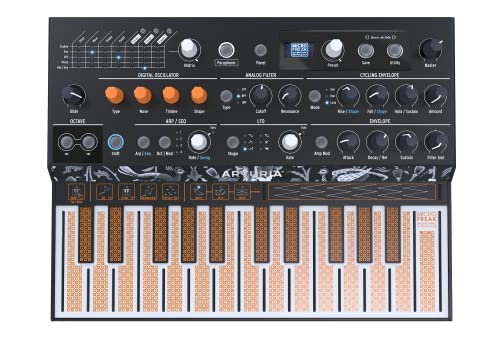 |
Arturia MicroFreak Paraphonic Synth | Massive oscillator variety | Unique touchplate interface | Advanced modulation routing | View on Amazon | Read Review |
| Seamless Software Integration | 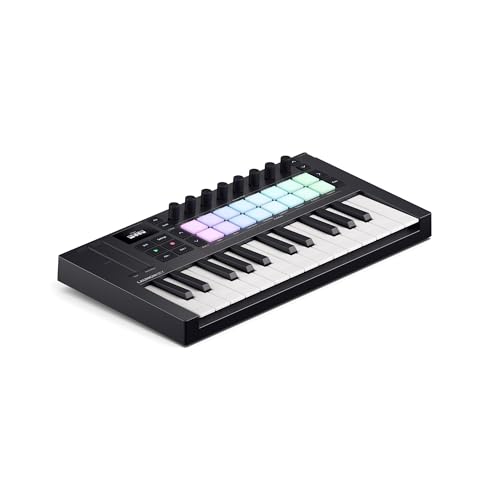 |
Novation Launchkey Mini MK4 | Excellent DAW integration | Helpful scale modes | Expressive pad aftertouch | View on Amazon | Read Review |
More Details on Our Top Picks
-
How to Play Synthesizer Guide
If you are staring at a new keyboard feeling completely lost, this book is your best starting point. It breaks down essential techniques into manageable lessons that help you understand how sound actually works.
You will find it helps you move past random knob-twisting into intentional sound design. The only drawback is that it cannot replace the physical act of playing, so keep your keyboard nearby while you read.
- Brand:Not Specified
- Device Type:Instructional Guide
- Additional Feature:Covers foundational synth techniques
- Additional Feature:Practical exercises included
- Additional Feature:Beginner-friendly explanations
-
Akai MPK Mini Play MK3
This unit is brilliant because it includes a built-in speaker and internal sounds. You do not need to boot up a computer just to sketch out a quick melody.
It is a fantastic tool for rhythmic beat making thanks to the eight responsive MPC pads. Be aware that the keys are quite small, which might feel cramped if you have larger hands.
- Brand:Akai Professional
- Device Type:MIDI Keyboard Controller
- Key Count:25 keys
- Connectivity:USB
- Software Bundle:Included
- Additional Feature:Built-in sound library
- Additional Feature:Velocity sensitive keys
- Additional Feature:Eight assignable knobs
-
Arturia MiniFreak Hybrid Synthesizer
This hybrid engine combines the warmth of digital oscillators with analog filters for a sound that feels both modern and classic. Its 37-key bed provides enough room for genuine two-handed playing.
You will appreciate the polyphonic capabilities that allow for complex chords and textures. The interface is quite deep, so it requires a bit of patience to master every modulation option.
- Brand:Arturia
- Device Type:Hybrid Synthesizer
- Key Count:37 keys
- Polyphony:6-voice
- Additional Feature:Analog filter architecture
- Additional Feature:Powerful arpeggiator
- Additional Feature:Extensive preset library
-
Novation MiniNova Analog Modeling
If you want to add robotic textures or strange vocal effects to your tracks, the integrated vocoder makes this your top choice. It uses analog modeling to create thick, punchy basslines and soaring leads.
The animate buttons add a layer of live performance control that is rare at this size. The menu system can be a bit dense, but it offers immense control over your sound.
- Brand:Novation
- Device Type:Analog Modeling Synthesizer
- Key Count:37 keys
- Polyphony:18-voice
- Connectivity:USB
- Additional Feature:Includes gooseneck microphone
- Additional Feature:Extensive preset library
- Additional Feature:Five effects per voice
-
Korg Monotron Delay Ribbon
Sometimes you just want to make weird, spacey noises without worrying about complex patches. This tiny machine is like a glorified noisemaker that fits right in your shirt pocket.
The analog delay circuit is surprisingly gritty and adds character to anything you run through it. Just remember that the ribbon controller is not for precise melodic playing, as it lacks standard keys.
- Brand:Korg
- Device Type:Ribbon Synthesizer
- Additional Feature:Ribbon controller interface
- Additional Feature:Built-in delay effect
- Additional Feature:Battery operated design
-
Stylophone Original Pocket Synth
Using a stylus to play a keyboard feels like something out of a science fiction film from the 1970s. It is a simple, monophonic instrument that produces a signature buzzy sound.
It is perfect for those who want a low-pressure introduction to synthesis. Do not expect professional recording depth, as this is primarily a fun, nostalgic tool.
- Brand:Stylophone
- Device Type:Pocket Synthesizer
- Additional Feature:Original metal stylus
- Additional Feature:Battery powered
- Additional Feature:Vintage aesthetic
-
Akai MPK Mini Plus
Moving up from the standard mini controllers, this version adds a dedicated sequencer that changes how you compose. It acts like the brain of your studio by connecting to external gear through CV and gate ports.
The extra keys provide just enough range for two-handed chord progressions. It might feel slightly overwhelming if you have never used an external sequencer before.
- Brand:Akai Professional
- Device Type:MIDI Keyboard Controller
- Key Count:37 keys
- Connectivity:USB, MIDI, CV, Gate
- Software Bundle:Included
- Additional Feature:64-step internal sequencer
- Additional Feature:Velocity sensitive keys
- Additional Feature:Eight MPC drum pads
-
Akai MPK Mini MK3
This is the industry standard for a reason, as it serves as a workhorse controller for almost any home studio. The keys are responsive enough for beginners to learn the basics of piano technique.
Everything is laid out logically for fast DAW integration when you are mid-flow. The only limitation is the 25-key range, which feels restrictive for complex piano arrangements.
- Brand:Akai Professional
- Device Type:MIDI Keyboard Controller
- Key Count:25 keys
- Connectivity:USB
- Software Bundle:Included
- Additional Feature:Eight MPC pads
- Additional Feature:Eight assignable knobs
- Additional Feature:Built-in arpeggiator
-
Arturia MicroFreak Paraphonic Synth
This instrument is a digital wild card that offers 21 different oscillator modes. It is like a science experiment for your ears, allowing you to explore wavetable, physical modeling, and virtual analog sounds.
The poly-aftertouch touchplate is highly expressive for a keyboard of this size. It lacks a traditional mechanical keybed, which might feel unusual if you are trained on a standard piano.
- Brand:Arturia
- Device Type:Paraphonic Synthesizer
- Key Count:25 keys
- Connectivity:CV, Pitch, Gate
- Additional Feature:Poly-aftertouch surface
- Additional Feature:Multiple synthesis modes
- Additional Feature:Analog filter included
-
Novation Launchkey Mini MK4
If your main goal is to control a computer program, this controller feels like an extension of your software. The dedicated chord and scale modes help you sound professional even if you do not know music theory.
The polyphonic aftertouch on the pads is a standout feature that adds emotion to your drum beats. It is designed specifically for portability, so the keys are quite small.
- Brand:Novation
- Device Type:MIDI Keyboard Controller
- Key Count:25 keys
- Connectivity:USB, MIDI
- Software Bundle:Included
- Additional Feature:OLED display screen
- Additional Feature:Built-in arpeggiator
- Additional Feature:Custom chord modes
Frequently Asked Questions
Do I need to know how to play piano to use a synthesizer?
You do not need formal piano training to get started. While basic knowledge of scales helps, synthesizers are designed for sound design and experimentation just as much as traditional playing. You can create incredible textures by simply turning knobs and triggering notes.
What is a patch?
A patch is a saved sound setting stored within the synthesizer memory. It includes everything from the tone color to the effects applied to the audio signal. Most modern synths come with hundreds of factory presets that you can modify to create your own unique sounds.
Should I buy a synthesizer or a MIDI controller?
A synthesizer contains its own internal sound engine and works without a computer. A MIDI controller is essentially a blank slate that requires software to produce any noise. If you want to perform without staring at a screen, buy a standalone synthesizer.
What does monophonic mean?
A monophonic synthesizer can only play one note at a time. This is standard for classic bass lines and lead melodies. If you want to play chords, you must look for a polyphonic synthesizer instead.
How do I get my music into my computer?
You can connect your synth to a computer using a simple USB cable for MIDI data. To record the actual audio, use an audio interface to convert the signal from the output jack into a digital format. This setup ensures your recordings sound clean and professional.