

Most high school seniors assume they must endure four years of undergraduate stress before even applying to medical school. In reality, the most competitive path bypasses that uncertainty entirely.
Securing a spot in the Best Bs Md Programs requires a shift in how you plan your academic future today. Use these resources to align your profile with the rigorous demands of these direct entry medical pathways.
Key Takeaways
- Prioritize guides that offer specific advice on balancing heavy course loads with essential extracurricular activities.
- Look for resources that detail the precise interview formats used by top tier university medical committees.
- Focus on material that explains how to write a compelling personal statement for combined degree applications.
- Verify that the guide includes actionable timelines for standardized testing and application submission dates.
- Choose books that provide clear explanations of the specific residency requirements for combined programs.
| Top Academic Blueprint |  |
BS/MD Programs Comprehensive Guide | Extremely comprehensive coverage | Clear organizational structure | Accessible for beginners | View on Amazon | Read Review |
| Strategic Admissions Manual |  |
BS/MD Programs Getting Into Medical | Actionable application advice | Focuses on high schoolers | Clear step by step guidance | View on Amazon | Read Review |
| Direct Entry Specialist | 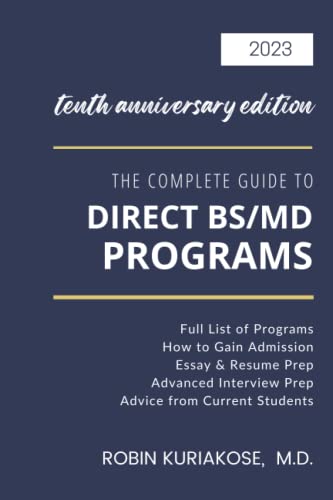 |
Complete Guide Direct BS/MD Programs | Technical program details | Clear preparation timeline | Strong focus on requirements | View on Amazon | Read Review |
| Holistic Preparation Tool |  |
Ultimate Guide to BSMD Programs | Balanced holistic approach | Professional tone | Wide scope of information | View on Amazon | Read Review |
| High School Success Guide |  |
BS/MD Programs Getting Into Medical | Simple and direct advice | Helps with timeline management | Practical application steps | View on Amazon | Read Review |
| Reliable Admissions Reference |  |
BS/MD Programs Complete Guide | Structured admissions cycle | Practical extracurricular tips | Easy to reference | View on Amazon | Read Review |
| Practical Application Handbook |  |
BS/MD Programs Getting Into Medical | Logical workflow | Focus on technical tasks | Clear and concise writing | View on Amazon | Read Review |
| Focused Career Starter |  |
BS/MD Programs Admissions Manual | Strong criteria analysis | Professional guidance | Career-focused perspective | View on Amazon | Read Review |
| Essential Application Companion | 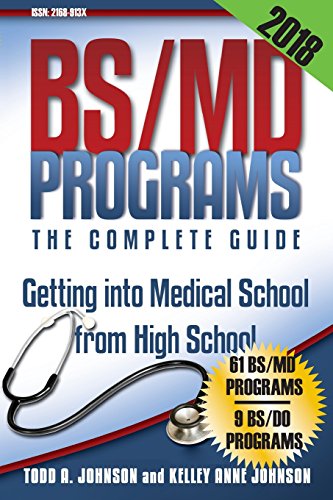 |
BS/MD Programs Complete Guide | Covers entire process | Helpful interview tips | Very accessible tone | View on Amazon | Read Review |
| Academic Strategy Planner |  |
Complete Guide Direct BS/MD | Great for planning | Deep academic insights | Useful selection criteria | View on Amazon | Read Review |
More Details on Our Top Picks
-
BS/MD Programs Comprehensive Guide
If you want the most reliable roadmap for medical school admissions, this volume acts as your primary compass. It provides a broad overview of the competitive landscape, making it ideal for students just beginning their high school research.
The text excels at breaking down the complex requirements of dual-degree programs. Just keep in mind that since it covers such a wide range of institutions, you will still need to supplement this with specific data from your target universities.
- Target Audience:Aspiring medical students
- Content Scope:National program overview
- Admissions Focus:Broad strategic planning
- Additional Feature:Detailed application timelines
- Additional Feature:Admission strategy worksheets
- Additional Feature:Program categorization guide
-
BS/MD Programs Getting Into Medical
Getting into a combined program feels like solving a complex puzzle, and this book gives you the pieces. It focuses on the transition from high school, ensuring you understand exactly how to position your application for success.
It is particularly useful for students who need help with their personal statements and interview preparation. Be aware that the advice is heavily weighted toward traditional academic profiles, so it might feel slightly less helpful if you have a non-traditional background.
- Target Audience:High school seniors
- Format Type:Instructional guidebook
- Admissions Focus:Application components
- Additional Feature:Essay writing prompts
- Additional Feature:Interview coaching tips
- Additional Feature:Extracurricular planning advice
-
Complete Guide Direct BS/MD Programs
Understanding the nuances of direct entry programs requires a specialized perspective, which is exactly what this guide provides. It helps you distinguish between different program structures while preparing you for the rigorous selection process.
You will appreciate the depth of detail regarding curriculum expectations and long-term commitments. While the information is very thorough, it does require a significant time investment to read through and apply the strategies effectively.
- Target Audience:Serious applicants
- Content Scope:Direct medical programs
- Admissions Focus:Program selection
- Additional Feature:Comparative program analysis
- Additional Feature:Prerequisite checklists
- Additional Feature:Academic roadmap templates
-
Ultimate Guide to BSMD Programs
This guide treats the application process like a serious project, offering a structured approach to your medical career goals. It is a solid choice for students who want to balance their high school academics with the intense demands of college applications.
The content covers a wide array of health care pathways, giving you a better sense of what to expect after admission. It does not spend as much time on specific university quirks, so you will need to do your own research on specific campus cultures.
- Target Audience:High school students
- Publication Date:Recent edition
- Content Scope:Full medical path
- Additional Feature:Clinical exposure advice
- Additional Feature:Research project guidance
- Additional Feature:Mentorship program tips
-
BS/MD Programs Getting Into Medical
Focusing on the critical transition from secondary school, this book simplifies the daunting task of applying to medical programs early. It works well for students who are feeling overwhelmed by early decision deadlines and complex requirements.
You get a clear view of how to manage your time effectively throughout your final years of high school. It can feel a bit repetitive if you have already read other guides, but it serves as a great reference book for your shelf.
- Target Audience:High school juniors
- Format Type:Comprehensive manual
- Admissions Focus:Early decision planning
- Additional Feature:Standardized testing advice
- Additional Feature:Recommendation letter templates
- Additional Feature:Application review checklist
-
BS/MD Programs Complete Guide
This volume acts as a solid foundation for any student determined to secure a spot in a medical program. It breaks down the admissions cycle into manageable phases, which is a massive help when you are balancing multiple deadlines.
The advice on balancing academics with extracurricular activities is particularly valuable. It assumes a base level of academic success, so it might not be the best fit if you are searching for alternative ways to boost a lower GPA.
- Target Audience:Pre-med students
- Content Scope:Admissions strategies
- Admissions Focus:Application components
- Additional Feature:Deadline tracking charts
- Additional Feature:Interview question database
- Additional Feature:Application filing process
-
BS/MD Programs Getting Into Medical
If you need a no-nonsense approach to your medical school applications, this is a strong candidate. It strips away the fluff to focus on the specific tasks that lead to an acceptance letter.
The book is best for students who want to work through the application phases in a logical order. One limitation is that it focuses more on the technical side of applying than on the emotional experience of medical school life.
- Target Audience:Motivated high schoolers
- Format Type:Reference handbook
- Admissions Focus:Application mechanics
- Additional Feature:Application portal tips
- Additional Feature:Timeline management tools
- Additional Feature:Summary of requirements
-
BS/MD Programs Admissions Manual
Think of this book as a career starting block for students who know their path early. It provides clear insights into the admissions landscape, helping you identify which programs actually match your personal strengths.
The level of detail regarding program criteria is quite impressive for a general guide. It is worth noting that the advice is quite traditional, which is perfect for most, but maybe limiting if you have unique circumstances.
- Target Audience:Early interest students
- Content Scope:Career planning
- Admissions Focus:Program fit
- Additional Feature:Personal profile assessment
- Additional Feature:School selection criteria
- Additional Feature:Long term planning
-
BS/MD Programs Complete Guide
For students who want a comprehensive overview of what lies ahead, this book is a reliable friend. It covers the entire application process, from initial searches to the final interview stage.
The chapters on interview preparation are particularly helpful for those who feel nervous about the social aspect of admissions. However, it does not provide as much specific data on individual school acceptance rates as some more technical guides.
- Target Audience:High school seniors
- Format Type:Guided manual
- Admissions Focus:Interview success
- Additional Feature:Mock interview scenarios
- Additional Feature:Application review tips
- Additional Feature:Timeline tracking sheets
-
Complete Guide Direct BS/MD
Preparing for combined programs is a marathon, not a sprint, and this guide helps you pace yourself. It is excellent for students who want to understand the academic rigor expected in these specialized medical pathways.
You will find the sections on program selection to be very useful for narrowing down your list of schools. It is worth mentioning that the density of information might be heavy for a casual reader, so it is best for those truly committed to the process.
- Target Audience:Academic high achievers
- Content Scope:Combined degree programs
- Admissions Focus:Program requirements
- Additional Feature:Curriculum expectations
- Additional Feature:Academic planning tools
- Additional Feature:Program comparison matrix
Frequently Asked Questions
Are these programs really easier than the traditional pre-med route?
They are certainly more predictable, but they are not necessarily easier. You still have to maintain a high minimum GPA to keep your spot in the medical school portion of the program. The pressure shifts from competing for a seat to maintaining consistently high grades every single semester. If you stumble academically, you risk losing your automatic admission.
Can I switch my major if I am in a combined program?
Most programs require you to stick to a science-based curriculum like biology or chemistry. Because the schedule is tightly packed, there is rarely room for elective changes or major pivots. You should view these programs as a specialized track designed for a specific outcome. If you have a deep interest in the humanities, you might find the restricted coursework frustrating.
What happens if I decide I do not want to be a doctor?
You are typically free to leave the program at any time, but you will lose your guaranteed admission to the medical school. You would then need to complete your undergraduate degree as a standard student. This is a significant commitment, so be sure you are certain about your career path before you sign on. Treating this as a trial run is a risky strategy for your academic progress.
Do I still need to take the MCAT?
Some programs waive the MCAT requirement entirely, while others require you to reach a minimum score to proceed. You must check the specific policy for each school on your list. Even when a score is not required for entry, it is often used to gauge readiness for the medical curriculum. Always clarify these expectations during your initial research.
Are these programs open to international students?
Many of these programs are restricted to citizens or permanent residents due to funding limitations or state-specific mandates. You should verify the residency requirements on the admissions page of each university. If you are an international applicant, your options may be more limited. Focus your search on private institutions that have specific international student policies.